When Was Italy Allowed to Have a Army Again
Skip to Primary Content of WWII
Hanging Tough: The Germans in Italy
When Discussing the battles of World War Ii, never forget the Germans.

No campaign illustrates the gulf betwixt what you lot hope to get in war, and what you actually get, than the Allied invasion of Italia in September 1943. Launched with high hopes of exploiting Italian give up and jetting upwardly the Italian peninsula, information technology soon bogged down. Indeed, U.s.a. troops barely got ashore at Salerno in September, then had a pretty hard time staying in that location. Since then, they'd been stuck in first gear for months, creeping alee over the treacherous mountains, valleys, and rivers of southern and central Italian republic. An endeavor to reopen mobile conditions in January 1944, an amphibious landing at Anzio south of Rome, went sideways early on, and wound upwardly as but another deadlocked forepart, with Allied troops sitting in a shallow bowl of a beachhead for months while German language shells rained down upon their heads. It's easy to turn the blame in for all this.
The United states of america commander at Salerno, General Mark Clark, grossly underestimated the difficulty of an amphibious landing, and in subsequently stages of the campaign, his disastrous attack on German positions on the Rapido River, for example, he seems little ameliorate than a butcher. Full general John P. Lucas, commander of the US Half dozen Corps at Anzio, was absolutely hapless. British Prime Minister Winston Churchill dreamed upward the whole Anzio mess, indeed the entire Italian campaign, and he as well deserves his share of the blame. That'due south all to the expert: generals and statesmen akin should be held answerable for their blunders and bad decisions, and the Italian campaign had plenty of both.
Simply of course, we know who was really to blame for the deadlock in Italy. It was the Germans, of course, and they are much praised in standard histories of the campaign. The generally accustomed narrative goes something similar this. The Germans in Italy had a Supreme Commander, Field Marshal Albert Kesselring, who is routinely described in English-linguistic communication histories every bit a genius. They had tough field commanders like General Eberhard von Mackensen, a Panzer commander of existent aggression and drive. They had meticulous planning, due to brilliant staff officers similar Kesselring'due south Master of Staff, Colonel Siegfried Westphal. And of form, they had tough, veteran soldiers. Add in a theater too narrow to allow a great deal of maneuver and the extremely difficult terrain, and yous accept a recipe for Centrolineal frustration in their plans to blast through German defenses and motor to the north.
-
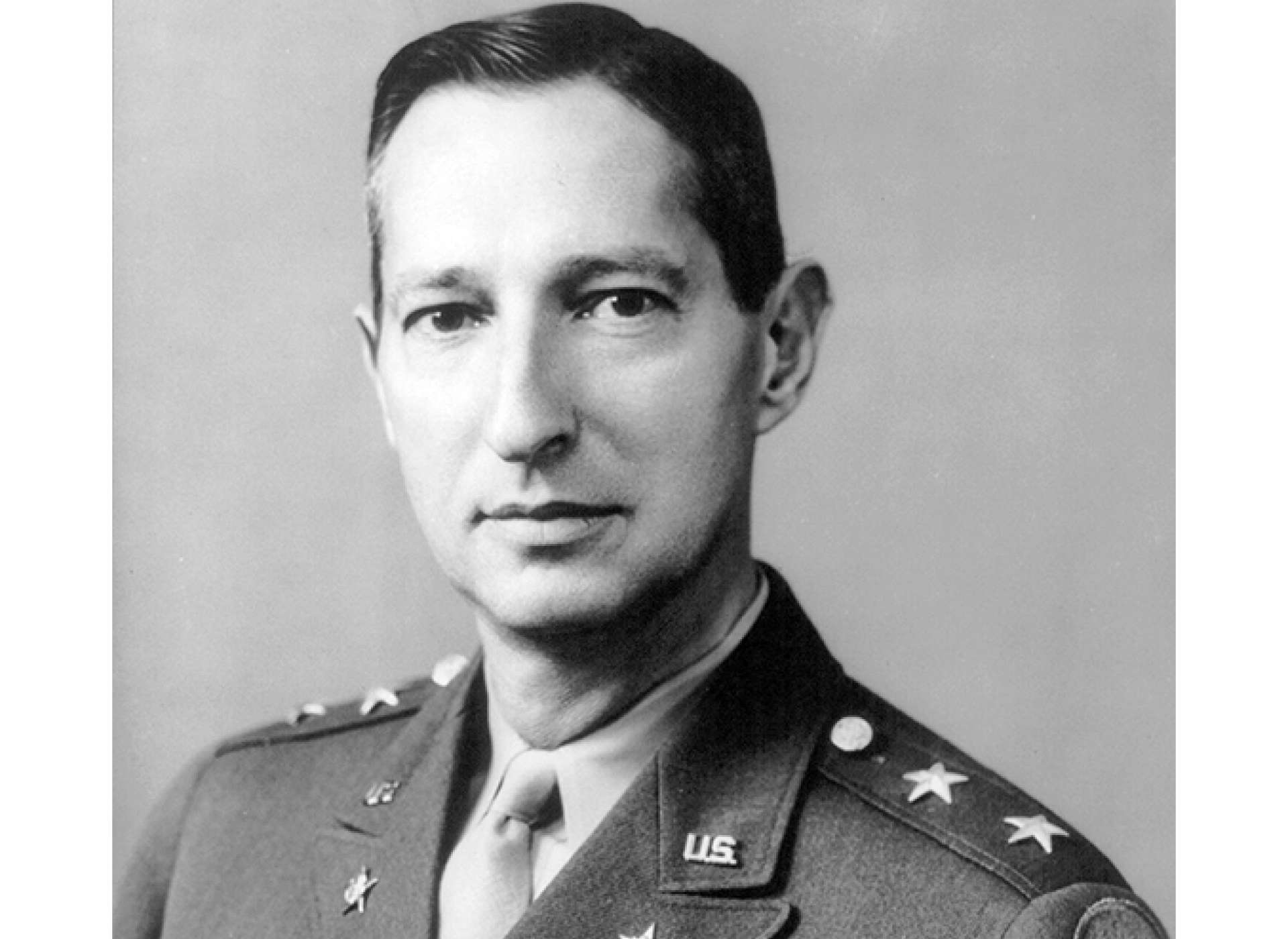
Full general Mark W. Clark, U.S. 5th Ground forces commander in Italy.
-
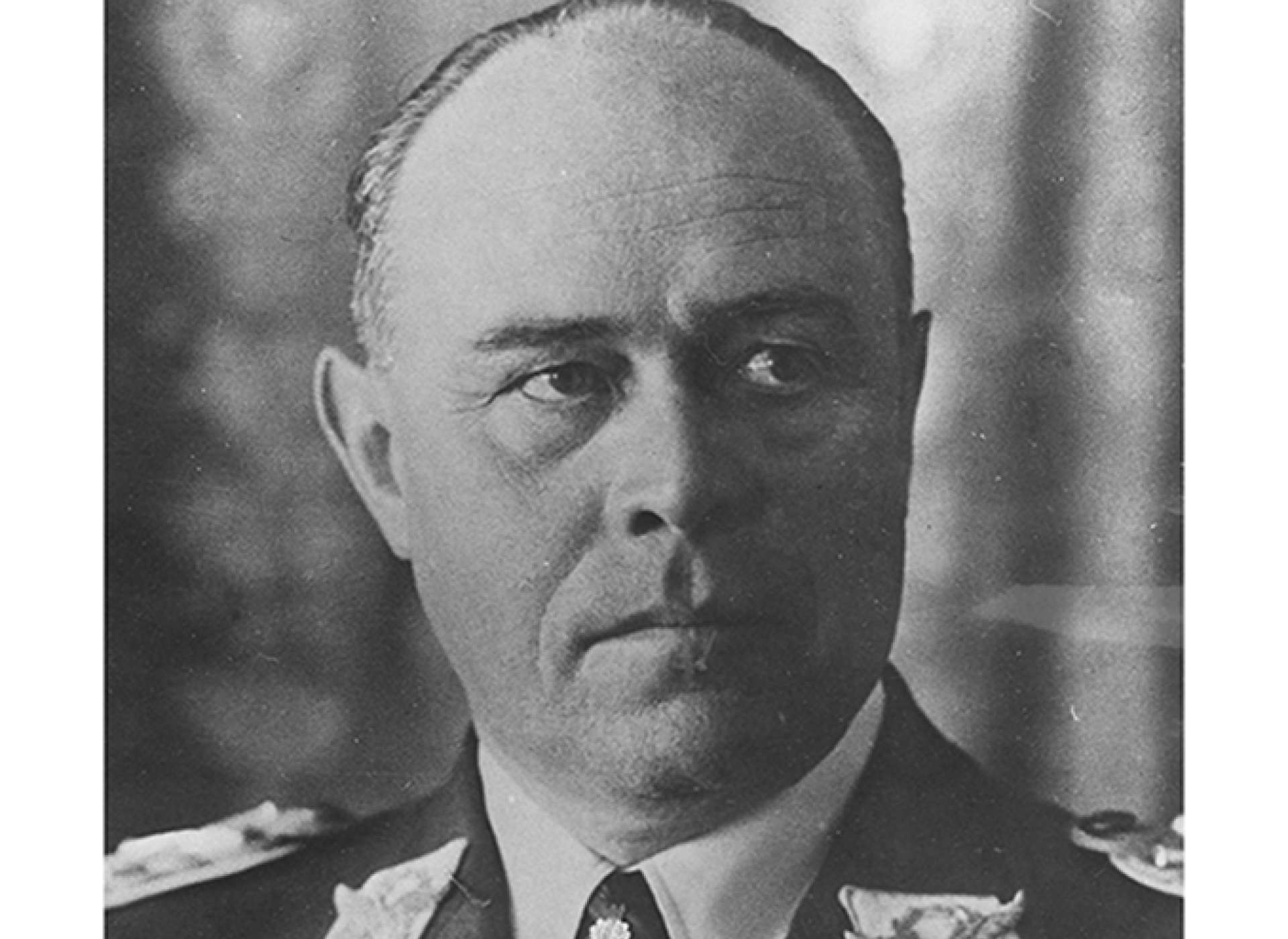
Field Marshal Albert Kesselring, German theater commander in Italian republic.
-
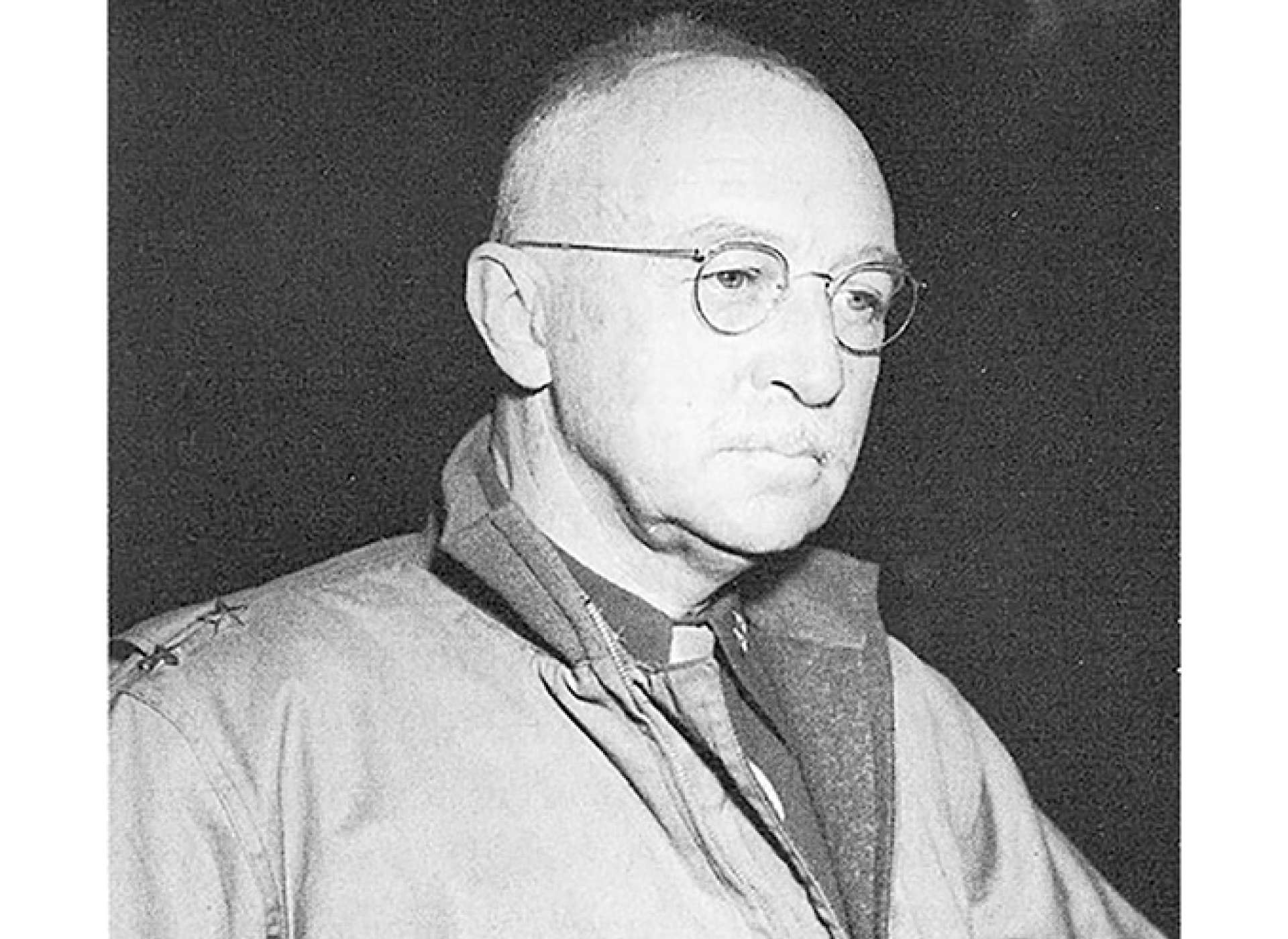
Major General John P. Lucas, U.S. VI Corps commander at Anzio.


At present, I'1000 not sure how true any of this really is. Kesselring was an able commander, certainly, but a "genius"? It would have been interesting to see him commanding on the Eastern Front—no one on the German side looked much like a defensive genius over in that location. Mackensen, for all the drive and energy he had shown in battle confronting the Red Ground forces, was in a bit of a funk in Italy; perchance he was burned out by this point of the war. Those crack German troops that we admire? Many were members of divisions destroyed in the Stalingrad pocket. They had been rebuilt, either from cadre, or from soldiers who had managed to escape the encirclement, or simply from the whole cloth.
The 305th Division under General Friedrich-Wilhelm Hauck was ane, a patchwork of men from all over the Reich or the occupied territories. Another "Stalingrad unit" was the 44th Sectionalization under General Friedrich Franek, filled with raw recruits and given a jerky grooming. The same might be said of the 94th Division. Its commander, General Bernard Steinmetz, was hard core, one of the concluding officers to wing out of the Stalingrad pocket, simply the quality of manpower and preparation simply wasn't there. In each example, moreover, these were late-model German language infantry divisions, consisting of only six battalions (3 regiments of two battalions each), compared to the Allied (and former German) standard of 9, and it is infantry battalions who hold the line and exercise most of your fighting.
The point: in terms of combat power—fresh divisions, trained manpower, firepower—the Wehrmacht was outclassed in Italia. The Germans were overstretched on multiple fronts, and in the words of the theater main of staff, Colonel Westphal, "the coating was threadbare," using an old peasant expression for lean times. Nevertheless, there were still 2 moments in this campaign when the High german army, commanders, men, and staff officers alike, showed the one-time burn down. Both were emergencies, do-or-die moments; both required improvisation, scrambling, decision-making on the fly and nerves of steel. On both occasions, German speed and flexibility were enough, barely, to main the moment.
The showtime was in September 1943, when it looked like Italy was about to fall apart altogether. An regular army under General Bernard Law Montgomery had landed in Calabria (Operation Baytown. General Clark'south army had landed at Salerno, south of Naples (Operation Avalanche). And just to add some spice, the Italians had betrayed their German partner and surrendered to the Western Allies, placing the entire German position in Italy in jeopardy. The situation was dire, merely in ane of the great operational scrambles of all time, the Wehrmacht managed to counter all three threats, placing just enough of a screen in Calabria to delay Monty (although he was something of a delay machine in his own right); launching Operation Axis and rushing divisions downward into Italy from the n, overrunning the unabridged peninsula and convincing 100,000s of Italian troops; and finally, facing down the principal effect, the Anglo-American landing at Salerno.
Day ane saw Clark'due south landing held up by a single div, the 16th Panzer. The next solar day, the Germans rushed two more divisions to the front end, sometime friends whom the Allies had fought in Sicily, the 1st Parachute Panzer Division "Hermann Göring" and the 15th Panzer Grenadier Division, with all iii divisions making upward the Fourteen Panzer Corps. Soon, ii more divisions (the 26th Panzer and 29th Panzer Grenadier) came upward from Calabria and Apulia, forming LXXVI Panzer Corps. Together, these ii corps made up High german 10th Regular army. Finally, once the Germans sorted out the touchy state of affairs at Rome, 3rd Panzer Grenadier Partitioning barreled downward the road to Salerno. Add together it all up, and in the crucial days subsequently the landing, the Wehrmacht'south surge capacity managed to outstrip the Allies. Inside three days, three Centrolineal divisions at Salerno were facing elements of vi German. No one should be surprised that it was a tough fight, however we might wish to assess Marker Clark's generalship.
The second moment was Anzio. The Allied landings on January 22, 1944, had taken the Wehrmacht completely by surprise, and the route to Rome was literally undefended. Histories of the entrada are filled with criticism of what the Allies did next. They came aground, manifestly relieved at their low casualties, then dug in and sat. Sure, that wasn't the right affair to do, but in the end, Anzio was not a failure just considering of Centrolineal mistakes or hesitation. It failed, one time once more, considering of the speed of the German reaction. As at Salerno, information technology was scrambling time. Consider this: the Allies landed at Anzio at ii:00 am. By three:00, the German operations main (the "Ia," in German language parlance), Colonel Dietrich Beelitz, awakened Chief of Staff Westphal with news of the landing. Contingency plans were already on the books for a landing near Rome, and Westphal now gave a single code discussion, "Richard." By the time Westphal woke upwards Kesselring and briefed him on developments, at five:00 am, the machinery was bustling.
An antitank screen would be in place around Rome by apex, and divisions from the four corners of Italy and beyond were already streaming towards Anzio. They included 71st Partition and tertiary Panzer Grenadier Partition from Cassino in the south. Elements of both divisions reached the forepart past morning time of January 23. By evening, more than formations had come up in: a regiment of the "Hermann Göring" Panzer Division, another one from 15th Panzer Grenadier Division, a motorized engineer battalion and an antiaircraft battalion. As these disparate forces hustled up to the beachhead, Kesselring placed them all nether the tactical command of General Ernst Schlemmer, a Luftwaffe staff officer in Rome whom he trusted. Schlemmer was in command for 24 hours. The adjacent twenty-four hours, the staff of I Parachute Corps under General Alfred Schlemm (no relation to Schlemmer) took control. He was in the saddle until January 25, when the staff of 14th Army under General Mackensen arrived from northern Italy to take command. By day three at Anzio, in other words, Full general Lucas and U.s.a. 6 Corps were already facing a full German field army. It's no wonder he didn't go anywhere.
My point, even in extremis, no one could scramble like the Wehrmacht, no ane could pull together a handful of battalions and plow them into a division, or cobble together a handful of divisions and plow them into an army. The Wehrmacht usually deployed faster than yous did, getting in your way and frustrating even your all-time-laid plans. In our haste to condemn Clark or Lucas or anyone on the Centrolineal side, we have to be fair. If you're discussing Globe War II in Europe, never forget the Germans!
This piece appeared originally as a presentation past Dr. Rob Citino at the International Briefing on World War II on November 23, 2019.

Contributor
Robert Citino, PhD
Robert Citino, PhD, is the Samuel Zemurray Stone Senior Historian in the Institute for the Study of War and Democracy. Dr. Citino i...
Learn More
Explore Further
-
The Marshall Program and Postwar Economical Recovery
The Marshall Programme was a massive commitment to European recovery after World War II that was largely supported by Americans.
-
Käthe Leichter, Champion for Austria'southward Working-Class Women
Käthe Leichter (1895-1942) was a champion for working-class women in the Austrian labor movement.
-
Beginning Fruits of Exile: European Art at Pierre Matisse 1942
In March 1942, a special exhibit opened in New York City of xiv pieces of art each contributed by 14 artists who had escaped Nazi-occupied Europe.
-
Lieutenant John Fox's Medal of Honor
John Flim-flam was one of seven African Americans who had their earlier awards upgraded to the Medal of Honor on January 13, 1997. Like all only one of the veterans, he did not alive to come across this accolade.
-
Wolf Beneath the Waves: U-505 Joins the Boxing of the Atlantic
For Allied leaders, 1942 was a twelvemonth of incredible danger and feet in the Battle of the Atlantic.
-
American Soldiers Go far in the Uk 1942
Soldiers of the Usa Army's 34th Infantry Segmentation, the "Red Balderdash" Division, landed in Belfast, Northern Ireland on January 26, 1942.
-
10 Notable Earth War II Books of 2021
Must-reads of 2022 picked by historians and scholars in the Institute for the Study of War and Democracy.
-
Nazi Germany, Imperial Nihon, and the Anti-Comintern Pact
The signing of the Anti-Comintern Pact betwixt Frg and Japan in 1936 was one of the truly momentous and horrifying conjunctures of the twentieth century.


Source: https://www.nationalww2museum.org/war/articles/hanging-tough-germans-italy
0 Response to "When Was Italy Allowed to Have a Army Again"
Post a Comment